2026-10-22 · Frank Delgado
What Uniondale Residents Should Know About Tree Roots and Water Lines
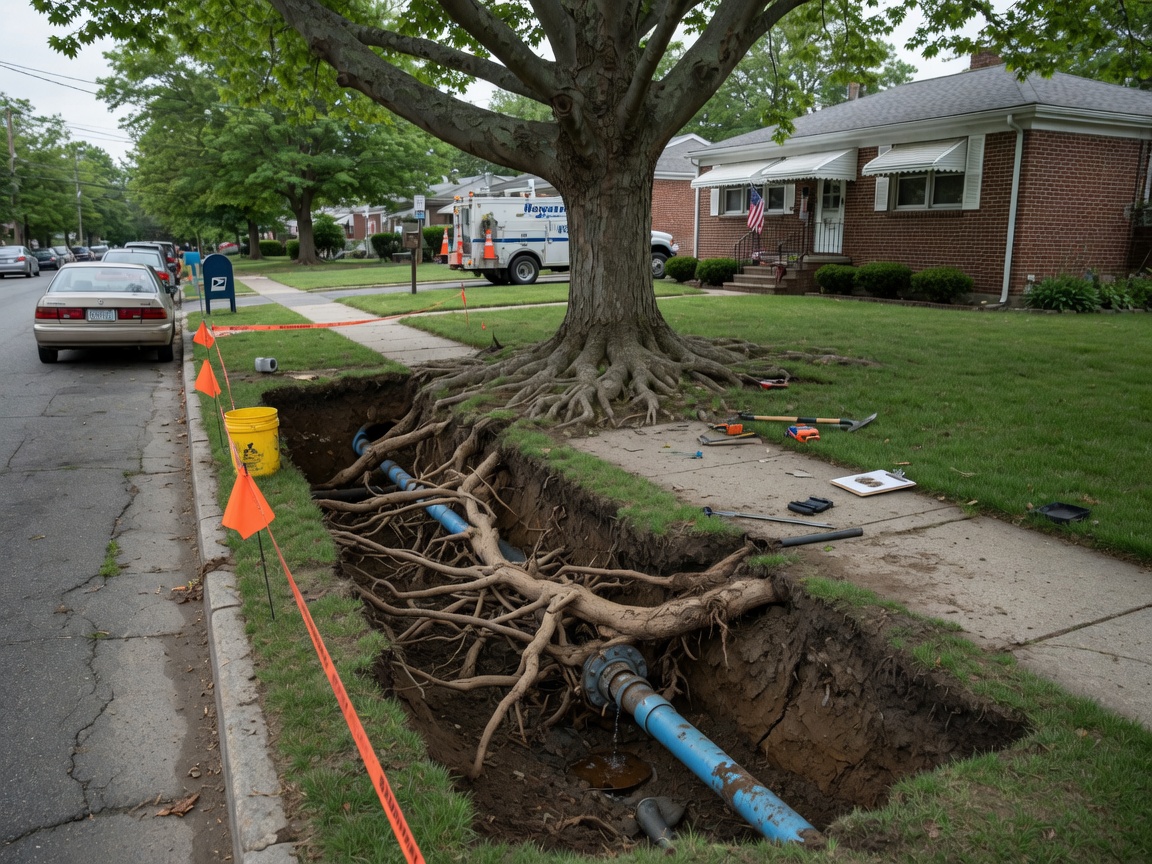
In Uniondale, tree roots commonly enter water lines through joints or hairline cracks in older pipes, often requiring Water Line Leak Repair within 8–15 years of the first signs if left unchecked. Homes built between the 1950s and 1970s in neighborhoods such as Nostrand Gardens and Wenwood Oaks typically feature cast-iron or clay service lines that roots find attractive during dry spells. The area's humid subtropical climate brings hot summers that dry surface soil while deeper roots chase consistent moisture from pressurized lines. Cold winters add freeze-thaw cycles that widen existing gaps, letting roots expand quickly once they gain entry.
Common Tree Species and Pipe Vulnerabilities in Uniondale
Maple, oak, and willow trees line many streets in Uniondale and nearby East Meadow, sending aggressive roots 20–30 feet outward in search of water. These species thrive in Nassau County's clay-loam soils that retain moisture yet crack during summer heat, creating pathways toward underground lines. Older ¾-inch and 1-inch service pipes common in Uniondale Park and Northwest Uniondale develop bell-and-spigot joints that shift slightly with soil movement, giving roots an easy starting point. Once inside, roots can grow to 2–4 inches in diameter within a single growing season, restricting flow and eventually splitting the pipe wall. Homeowners near Hofstra University often notice problems first in front-yard lines where mature trees were planted decades ago alongside the original construction.
How Nassau County Soil Conditions Contribute to Root Growth
Nassau County's heavy clay soils expand when wet and contract when dry, stressing pipe joints more than sandy soils found farther east. This movement creates micro-fractures that roots exploit, particularly along the 4–6 foot burial depth used for most Uniondale service lines. High water tables near the Meadowbrook corridor keep soil moist year-round, encouraging roots to stay shallow and dense. In contrast, the slightly elevated terrain around Seasons and the Meadows sees more seasonal drying that drives roots deeper toward consistent water sources. These soil realities mean repairs in Uniondale frequently involve excavating larger areas than in neighboring Hempstead to reach the full extent of root damage.
Seasonal Effects from Humid Summers to Cold Winters
Hot, humid summers increase evapotranspiration, pulling roots toward any reliable moisture source including leaking water lines. By late August, roots have often packed joints tightly enough to reduce pressure at fixtures. Once winter arrives, the freeze-thaw cycles detailed in How Nassau County Winters Affect Underground Water Lines in Uniondale further open those same joints, allowing roots to regrow even larger the following spring. Uniondale residents commonly see the first slow drains in October and the first surface leaks after the ground thaws in March. Addressing issues before the ground freezes prevents more extensive excavation once temperatures drop below freezing.
Detecting and Addressing Root Damage Early
Slow drains that improve after using a plunger but return within days often indicate root intrusion rather than simple clogs. Unexplained damp patches in lawns along the service line route, especially near mature trees, signal leaks that roots have already entered. A sudden drop in water pressure at one fixture while others remain normal points to a partial blockage downstream. Professional Water Line Leak Detection using camera inspection confirms root presence without unnecessary digging. Once identified, targeted removal followed by pipe lining or sectional replacement restores flow while minimizing landscape disruption in established Uniondale yards.
Long-Term Strategies for Uniondale Homeowners
Planting new trees at least 20 feet from known service line routes reduces future risk in neighborhoods such as Uniondale Park. Installing root barriers during any excavation work creates a physical block that most species cannot penetrate. Scheduling annual camera inspections every 3–5 years catches early intrusion before it reaches the 2-inch diameter stage that forces full replacement. For homes on Pleasant Ave in nearby Roosevelt or along the Hempstead line, combining barrier installation with Underground Water Line Repair provides lasting protection against both roots and seasonal soil movement. These steps keep service reliable without repeated emergency calls during peak summer or winter conditions.