2026-10-22 · Frank Delgado
How Nassau County Winters Affect Underground Water Lines in Uniondale
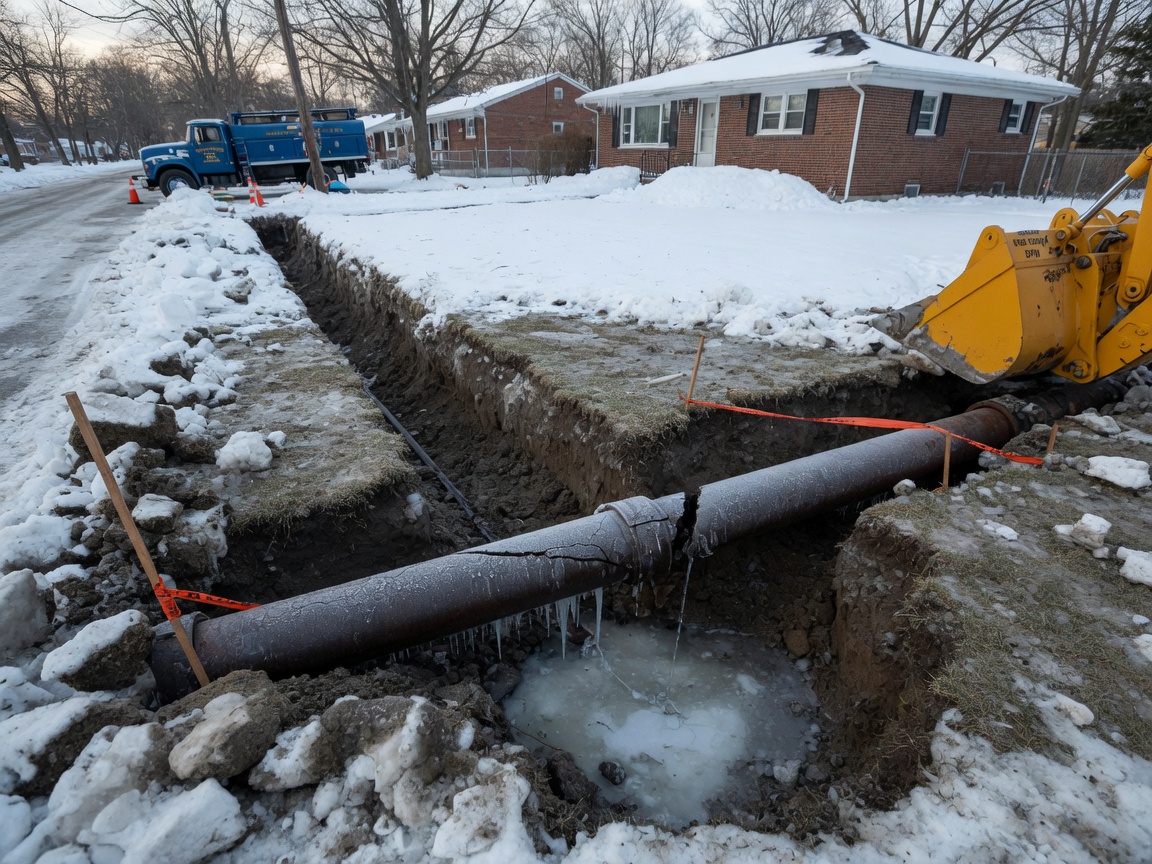
Nassau County winters drop temperatures low enough to freeze shallow soil layers in Uniondale, expanding ground around older copper and galvanized lines and creating stress fractures that often appear first as reduced water pressure or unexplained wet patches near sidewalks.
Soil Heave and Pipe Stress in Uniondale
Uniondale sits on glacial till soils that retain moisture through the humid subtropical pattern of cold winters. When overnight lows stay below freezing for several nights, the top 12 to 18 inches of ground expands upward, tugging on service lines that run from the street main to homes built in the 1950s and 1960s. This movement is most noticeable in neighborhoods such as Northwest Uniondale where yards slope gently toward Hempstead. Homeowners often see the first sign as a sudden drop in flow from outdoor spigots after a January thaw. The repeated freeze-thaw cycle also loosens joints at the meter, especially on lines that were never sleeved during original installation. Underground water line repair crews working these streets routinely find hairline cracks that only open after the ground contracts again in late February.
Common Leak Locations Near Local Landmarks
Lines serving homes close to Hofstra University and the Nassau Coliseum cross older utility corridors installed before modern bedding standards. These corridors contain more backfill rock that holds frost longer than native soil, concentrating expansion forces on the pipe. In East Meadow and Hempstead border streets, crews see repeated failures where lines pass under driveways that were widened in the 1980s without proper insulation. The added weight of plowed snow along curb lines keeps the ground frozen deeper, extending the period of stress. A typical winter produces two to three service calls per block after each major cold front passes. Residents in Nostrand Gardens report the same pattern on lines that run parallel to tree plantings installed decades ago.
How Freezing Changes Repair Timing and Scope
Once a leak is confirmed, the window for excavation shrinks because daytime highs rarely climb above freezing for long. Crews must work around frozen spoil piles and often bring in heated enclosures to keep joints workable. In Uniondale Park and Wenwood Oaks, narrow side yards limit equipment access, forcing hand digging that adds hours to each job. Homeowners who locate their main shutoff early can isolate the line and avoid interior flooding while waiting for daytime temperatures to rise. Water line leak repair teams schedule these calls between 8am and 6pm weekdays or 9am to 2pm on Saturdays to match available daylight. The same cold that damages the line also stiffens older rubber gaskets at the curb stop, so replacement parts must be on the truck before excavation begins.
Preparing Lines Before the Next Cold Front
Checking for slow leaks in late fall prevents small cracks from widening under frost pressure. Running an outdoor faucet at full volume while listening at the meter for continuous flow reveals hidden issues before the ground hardens. In Seasons and the Meadows, where many homes still have original ¾-inch lines, any drop below 40 psi at the hose bib often signals an impending winter failure. Pairing this check with the guide on locating the main shutoff valve helps residents act quickly when pressure changes occur. Tree-root interference already weakens some lines in the area, and winter movement simply finishes the job; the related article on tree roots and water lines covers those overlapping risks in more detail. Regular visual checks of the crawl space or basement wall where the line enters the house catch moisture before it reaches finished floors.